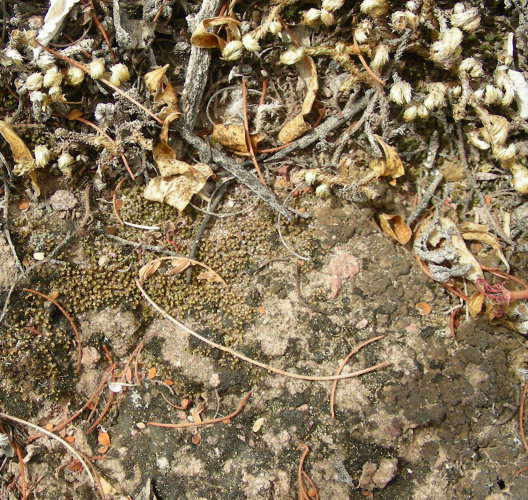
CRYPTOBIOTIC
CRUST is also called BIOLOGICAL SOIL CRUST.
These are communities of
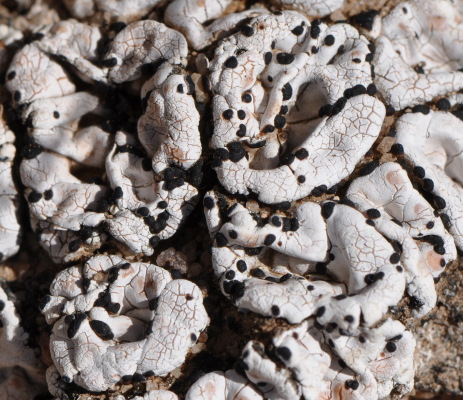
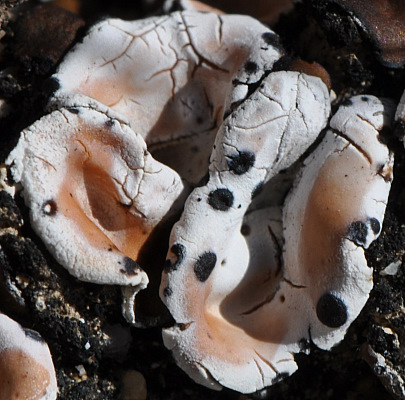
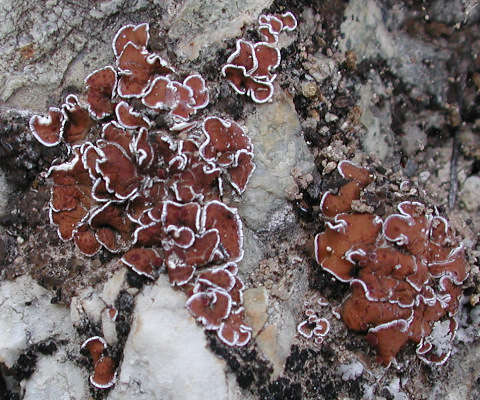
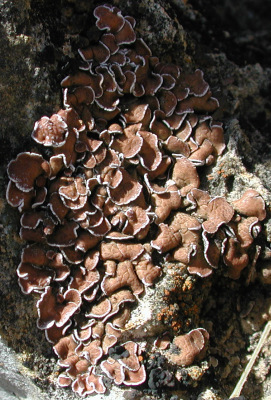
cyanobacteria, green algae, lichens, mosses, liverworts, and microorganisms
that colonize the surface of bare soil. "Cryptobiotic" means "hidden
life." Crusts often go unnoticed unless they are very extensive or
colorful, and some do not even look alive. But they are vital
to the health of soils and ecosystems. Cryptobiotic crust is best
known (and probably most studied) from the protected lands of the national
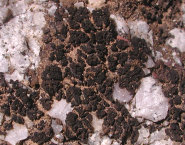
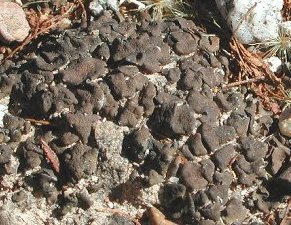
parks of the Colorado Plateau, where it forms dark lumpy patches on the
red soil. But it is equally important to desert, prairie, and tundra
ecosystems, and also colonizes bare ground in humid temperate environments.
The most complex and spectacular "old growth" crusts take decades to develop.
They are miniature forests with dozens of species of cyanobacteria, green
algae, mosses, and lichens over a dark layer of organic-rich soil.
The damp soil is alive with earthworms, snails, millipedes, insects, and
microorganisms, and nourishes grasses, wildflowers, and even trees.
WHERE CAN I FIND CRUSTS?
You must look beyond the
more obvious landscape features and learn to see in a different way.
Seek subtle differences in color and texture on bare soil between the rock
outcrops, among a scatter of pebbles, or under thorny trees and inconspicuous
shrubs. You will discover a tiny, intricate and surprisingly beautiful
hidden world.
WHAT GOOD ARE THEY?
Crusts hold the soil in
place and protect underlying sediments from erosion. They pioneer
soil development on bare inorganic sediments, absorbing water and enriching
the surface with nutrients and organic matter. This creates a favorable
environment for seeds to germinate and for insects and other soil organisms
to live. Crusts enable the land to recover more quickly after a fire.
Crust organisms such as lichens and dried mosses are vulnerable to burning
and can be killed even in a relatively cool, fast-moving grass fire.
But the cyanobacteria often survive. Grasses, shrubs, and crust organisms
regenerate faster in this living substrate than they would on barren ground.
CRYPTOBIOTIC CRUSTS ARE
FRAGILE.
They are extremely susceptible
to destruction by crushing and trampling. Once damaged, they may
take many years to grow back. Meanwhile, several feet of sediment
may be washed or blown away. Areas that have been stripped of cryptobiotic
crusts are vulnerable to erosion, flooding, deflation, dust storms, invasion
of exotic weeds that thrive on disturbed soil, and/or chemical impoverishment
due to loss of organic material and precipitation of evaporite minerals. Hikers
and horseback riders who venture off established trails can damage crusts.
This is a localized issue that can be reduced through education and regular
trail maintenance. Offroad vehicles venturing off established routes are a more widespread and serious
problem.
PUBLIC-LANDS RANCHING IS
A MAJOR THREAT to cryptobiotic crusts and nearly all Western U.S. plant
communities. Cattle strip vegetation and leave only the most inaccessible
crevices untrampled. Cryptobiotic crust cover on public land is often
measurable only in square inches, usually under shrubs or in cracks between
rocks that are too steep for cattle. Well-developed crust communities
flourish only where cattle are excluded. The ranching culture perpetuates
several myths about crusts: vast areas of desert are thought to be
"naturally" devoid of crusts, and crusts may be deliberately destroyed
because they "compete" with grass or "prevent" grass from growing.
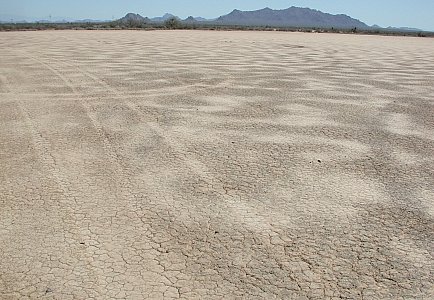
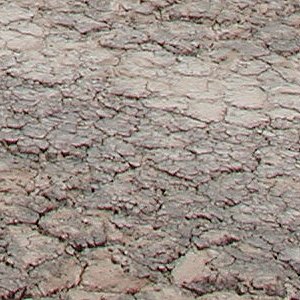
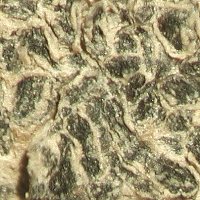
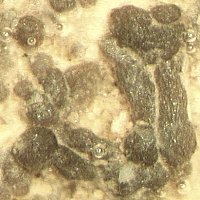
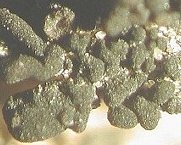
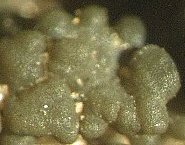
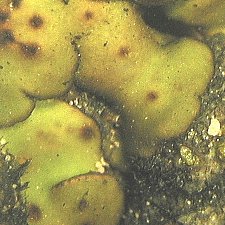
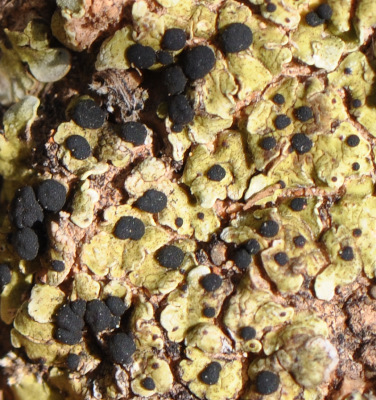
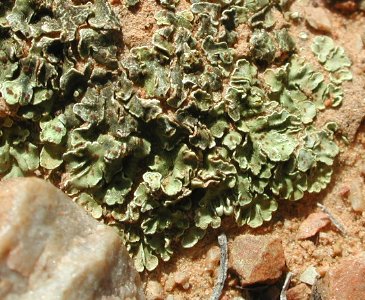
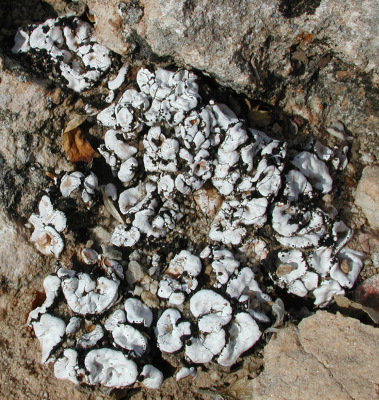
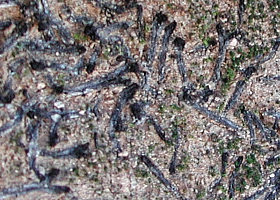
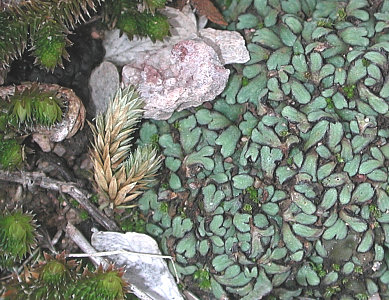
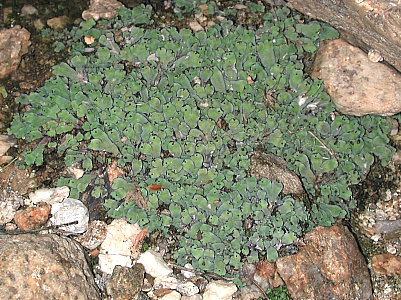
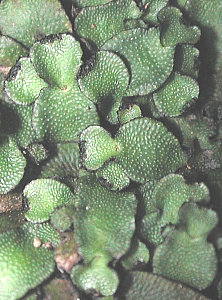
Specimens illustrated
are from public land in southern Arizona: State, USFS, BLM, and Saguaro
National Park. |